
The first time I hurt my back it was not a 200 kg deadlift. It was a wet suitcase, a twist, and the belief that warm-ups are for people with coaches. I was 41. The suitcase was not heavy. The pattern was ugly. I spent two weeks walking like I had been assembled wrong.
Strength training’s mortality story is not a mystery anymore. Grip, leg power, not falling, not becoming a collection of chairs. The hinge is how humans pick a child up, a box up, a bag of soil up. If you only squat and curl, you leave a hole. If you only hinge with a rounded back and a bounce, you leave a different hole.
This is not a program. It is a case for owning the pattern, then loading it slowly. If you have a disc history, stenosis, a surgeon, or pain that travels down a leg with numbness, you get a physio, not a blog cue.
What a hinge is
Hips go back. Knees soften. Spine stays roughly the length you started with. The bar or bell stays close. You feel it in the back of the legs and the upper hamstrings more than in the low back as a sharp protest. If the low back is doing a row, you folded in the wrong place.
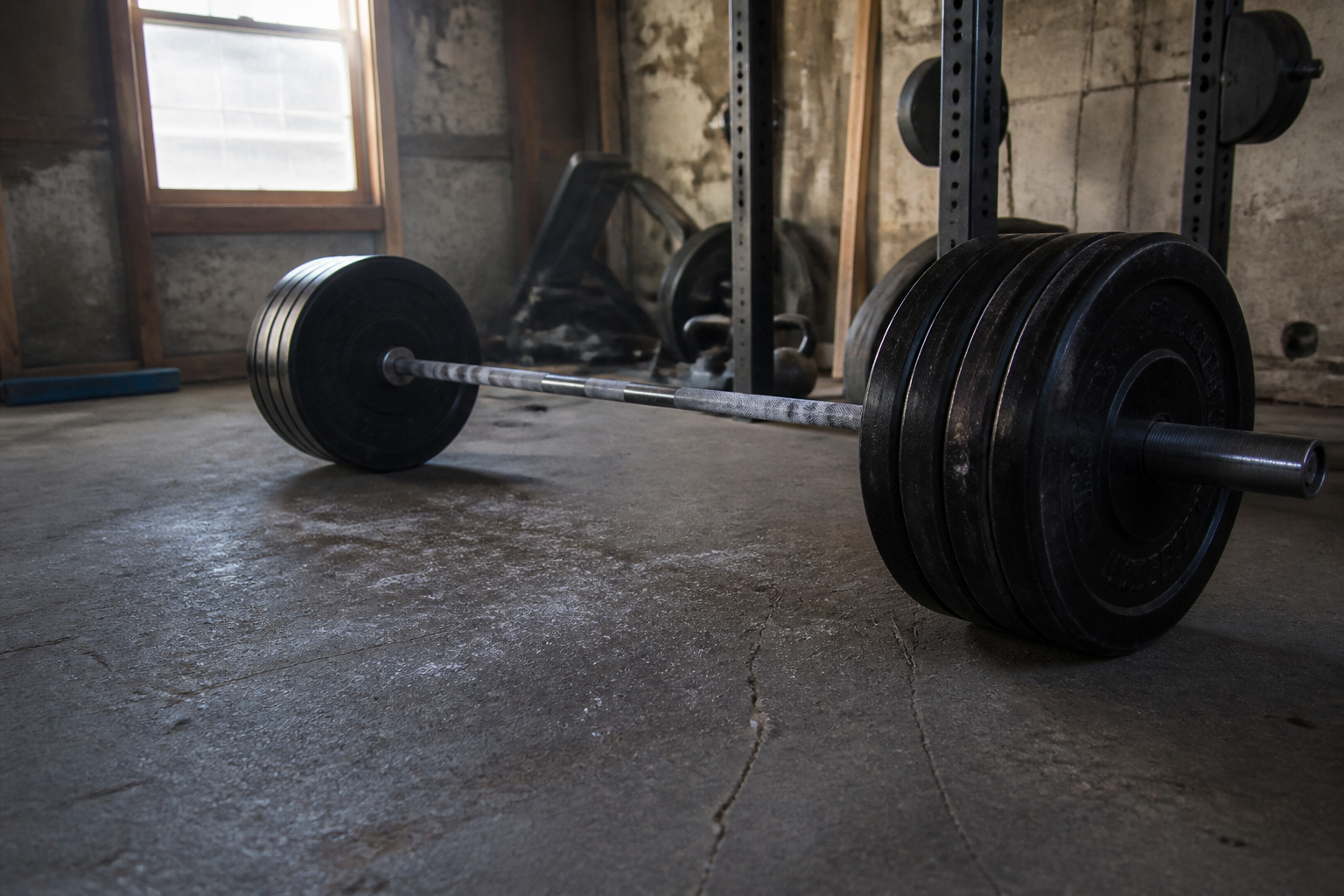
A conventional deadlift, a trap-bar deadlift, a Romanian deadlift, a kettlebell deadlift, a good morning with a tiny load: same family. The trap bar is kinder for a lot of men with cranky backs because the handles sit beside you. Ego prefers a straight bar. Ego is not a coach.
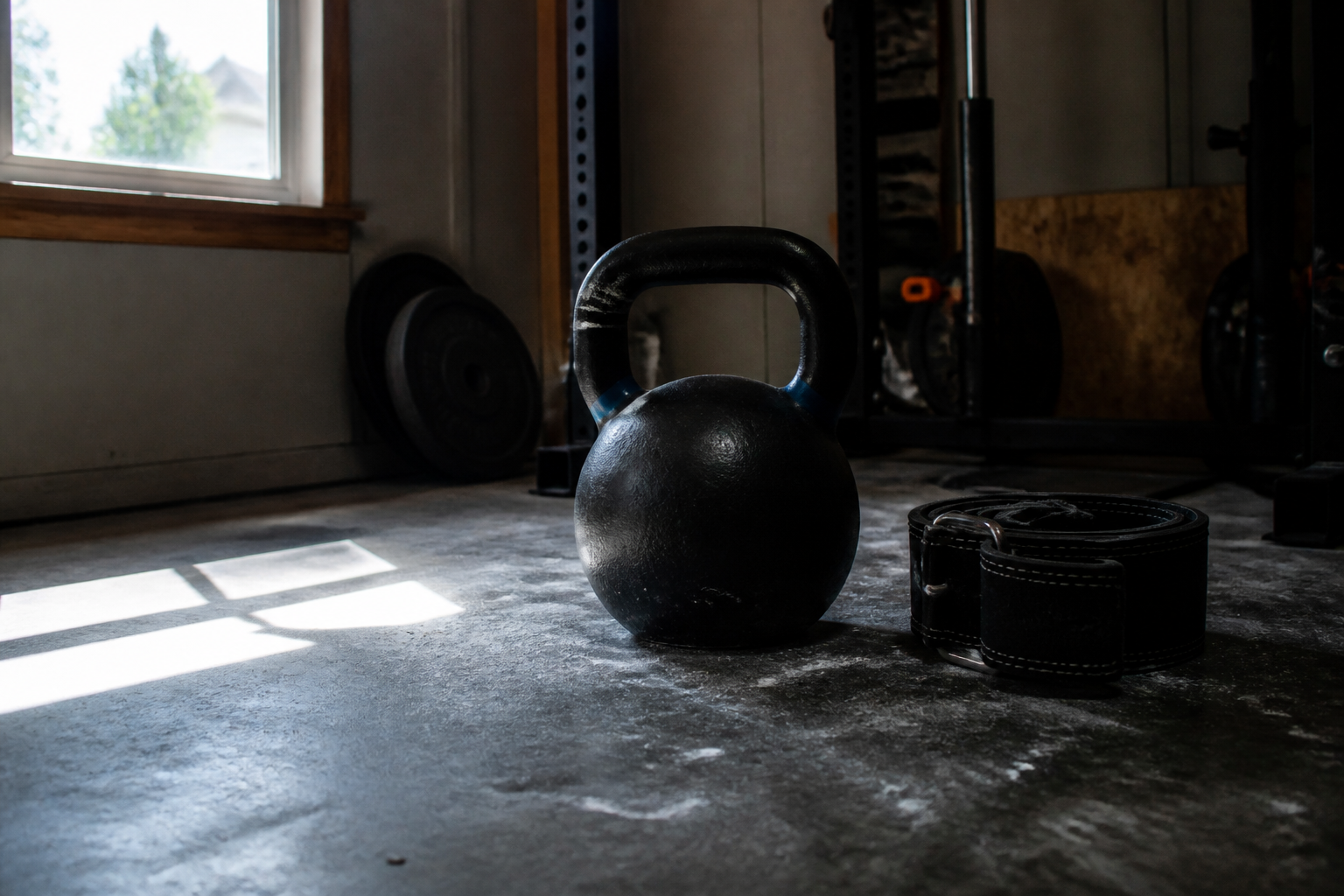
I like the kettlebell on the kitchen floor for the first month if a man has not hinged in a decade. It is hard to be a hero with 16 kg if you insist on filming. See also rucking for loaded walking. Different tool. Both beat a drawer of testosterone boosters.
How heavy, how often, without a novella
Two times a week is enough to keep the pattern. Three if you enjoy it and you recover. I do not need you at 90% of a max you tested after three coffees. I need sets you could repeat next week. The minimum effective dose piece already argues against living in the gym. This is the hinge-shaped version.
Warm up with the empty bar or the light bell until the groove looks like the groove. Then add plates like an adult. A jump from 60 to 120 because the gym was quiet is how you meet a physio.
Breath: brace like someone might poke your gut, then move. I am not going to teach a full powerlifting meet routine in a paragraph. If the weight is serious, get a coach in the room for a session. One session. Cheaper than an MRI.
Pain during: stop. Pain after that is a dull fatigue in the muscles you meant to use: probably training. Pain that is sharp, radiating, with pins and needles: not a “no days off” caption.
A log that includes the ugly week
At 44 I trained conventional deadlifts twice a week. Work sets around 120 kg for fives, nothing cinematic. Then I skipped two weeks for travel, came back, and pulled a single at a number I used to own. My back announced the error the next morning. The correction was not a peptide. It was swallowing pride, trap bar for a month, and hinging every session with a weight that looked embarrassing on camera. Camera stayed off.
When the pattern was there, the suitcase in the hall stopped being a lottery. That is the longevity sell I actually believe. Not a trophy pull. A life where the floor is not a threat.
A first month that is allowed to look small
Week 1: kettlebell or trap-bar deadlift, two days, three sets of eight at a weight you could do ten. Film one set from the side. If the lumbar rounds like a banana, drop the load and shorten the range with blocks.
Week 2 to 4: add a little when the bar path is boring. Boring is the goal. I would rather you own 60 kg well than bounce 100 kg.
I do not need a deload spreadsheet. If sleep was garbage or the back whispered, I keep the pattern and cut the load. The pattern is the furniture. The load is the decoration.
People ask about “deadlift every day.” Some programs do light daily hinges. That is a coach’s problem. I am not that coach. Twice a week has kept my suitcase legal.
Bone density, tendon stiffness, the ability to get off the toilet at 80: the literature likes resistance training in general. I am not going to pretend one lift is a drug. I am going to pretend, correctly, that never picking up a heavy thing is a plan with a downside.
Form cues I still mutter
Shoes with a heel can dump you forward. Flat shoes or socks on a private floor. Laces you will not trip on.
The bar over midfoot, not over the toes. Shoulders slightly in front of the bar at the start of a conventional pull, then the whole system rises together. If the hips shoot up and the bar is still on the floor, you just did a good morning with extra steps.
Videos from the side once. Not a hundred. You are looking for a spine that does not flex like a fishing rod at the lockout.
Who should not start with my garage
Uncontrolled hypertension, recent surgery, hernia you are ignoring, pregnancy (not our reader), acute sciatica, a coach who already gave you a regression. If climbing stairs is the current max, start with sit-to-stands and a physio, then hinge later.
See home blood pressure if your numbers are a mess and you planned to max anyway. That is a bad pairing.
Common questions
Squat instead? Do both if you can. The hinge is the pickup. The squat is the sit-to-stand. Life uses both.
Machines? A seated hamstring curl is not a hinge. A hip-hinge machine can teach the fold. Then go to free weight when you are not lost.
Belts? A belt is a cue and a brace tool for heavier sets. It is not a substitute for the pattern. I would not belt a 20 kg kettlebell.
How fast should I add weight? When the last set looks like the first set, add a little. Not every session. Not on a week you slept four hours.
CrossFit-style cycling at high reps? Different sport. Fatigue wrecks hinges. I would not learn the pattern there.
Do I need to go to the floor? If a deficit pull or a stiff-leg from blocks wrecks you, raise the bar to blocks or pins and own that range first.
Sources
- Behm DG, et al. and ACSM resistance training position stands (frequency, load, older adults).
- Sherrington C, et al. Exercise for preventing falls (strength as part of the picture).
- McGill SM. Back mechanics papers and books: spine motion versus hip motion in lifting (read him for mechanism, not as a brand).
- Trap-bar versus straight-bar EMG and constraint studies (comfort, not morality).
- WHO physical activity guidelines: muscle-strengthening on two or more days.
Science edit: Lena Park. Not a rehab plan. Not a meet program.