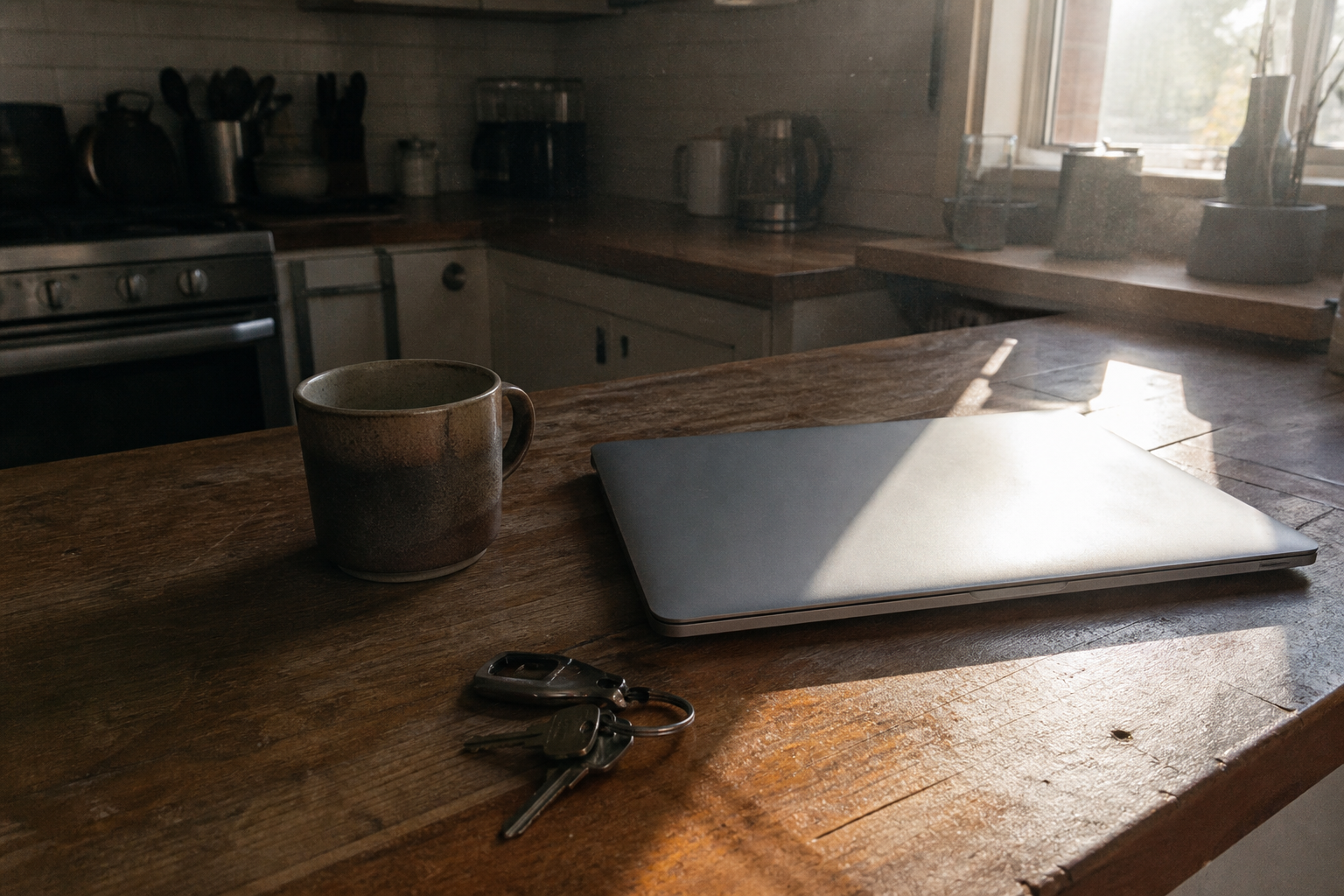
I like coffee. I used to drink it in a dark kitchen at 6:15 with the news on my phone, then wonder why I was still foggy at 10 and why 9pm felt like 7pm.
Your eyes have a set of cells that mostly care about brightness, not about reading. They talk to the clock in the brain, the suprachiasmatic nucleus, which is a small cluster of cells with a large opinion. That clock then talks to cortisol timing, melatonin timing, body temperature, and the unhelpful urge to snack at 11pm. If the first strong light of the day arrives at 9:30 under office LEDs, the clock thinks the day started at 9:30. Everything slides.
This is not a Huberman merch page. The melanopsin story is older than the podcast. ipRGCs were described in the early 2000s. Czeisler’s group and others spent decades showing that light is the main time cue for humans. The protocol is almost insultingly cheap. That is why people skip it and buy a powder.
What to do that is not a gadget
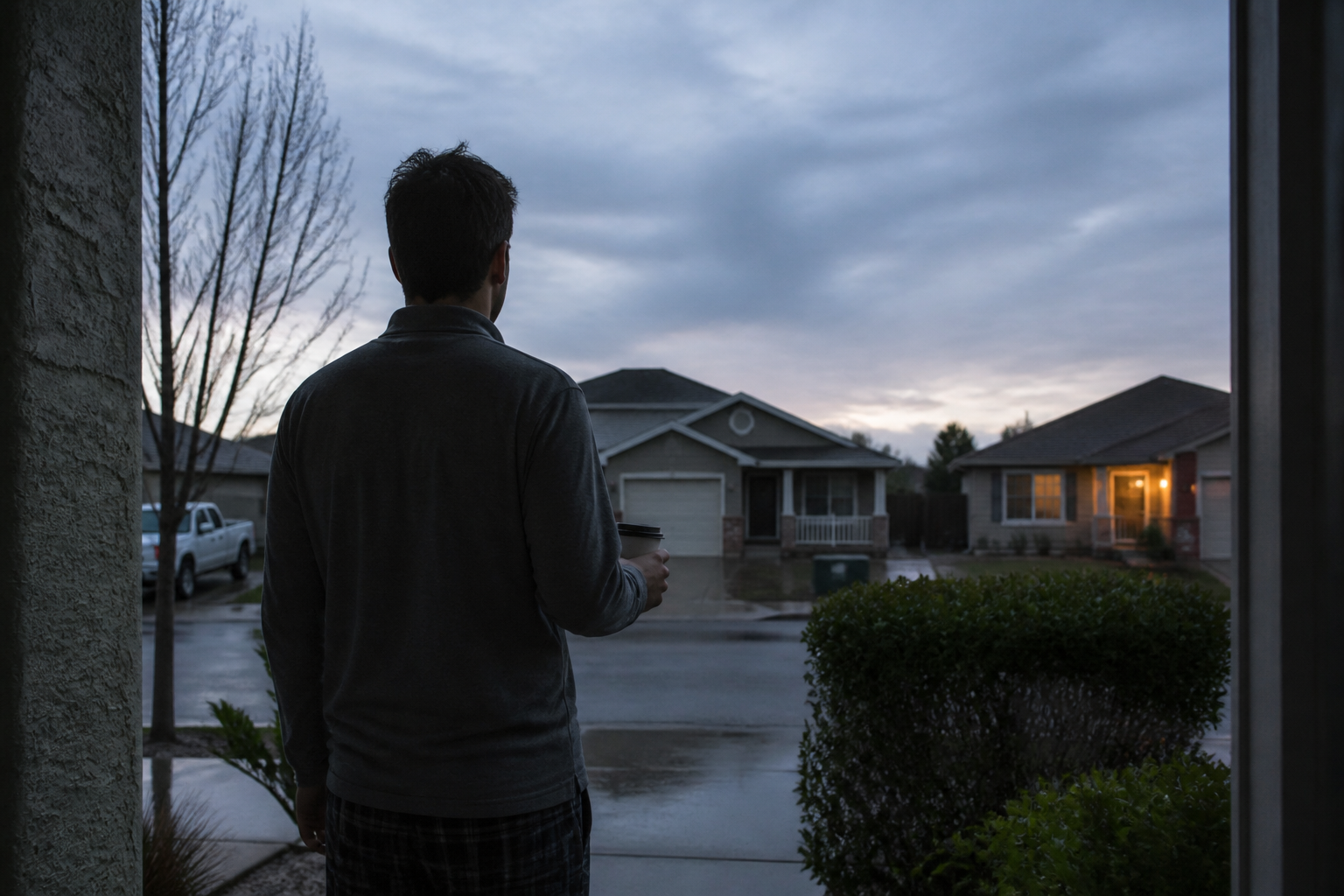
Get outside within an hour of waking. Ten minutes is enough on a bright day. Twenty if it is overcast. Do not stare at the sun. Look at the sky. Clouds still count. A window is better than a phone and worse than the door.
If you wake before dawn in winter, a bright lamp in the 5,000 to 10,000 lux range is the unromantic substitute. I have used one. It looks like a small appliance from 2009. Sit near it while you eat eggs. Do not look into it like a dare. It works better than another magnesium brand for “I cannot wake up.”
Coffee can wait 45 to 90 minutes if you can stand it. Adenosine is part of why you feel the first crash of the day. Caffeine blocks the receptors, then they come back louder. I do not treat this as religion. I treat it as: if I am already jittery and I still need a 3pm espresso, the morning was late.
What I measured when I actually went outside
For two weeks in February I did the door first, coffee second. I live at a latitude where February is a joke. Overcast most days. I still stood on the step for 12 to 20 minutes with a coat that made me look like I had lost an argument.
Sleep onset on the wearable moved about 25 minutes earlier by the second week, without me “trying to sleep earlier.” Evening sleepiness showed up closer to 10 than 11:30. That is the clock sliding, not moral improvement.
Week three I got lazy and went back to kitchen-phone-coffee. The 11:30 second wind returned in four days. I am not proud of how cheap the reversal was.
Again: n=1. The literature is what makes me trust the direction. The notebook is what made me stop skipping the step.
Indoor light is not the same currency
Office LEDs are usually a few hundred lux at the eye. Outdoor shade is often thousands. A phone at 20cm can be bright in a dark room and still be a confused signal because the spectrum, the angle, and the rest of the visual field are not a horizon.
Scrolling in bed with a bright screen is not a sunrise. If you only change one thing this month, make it this: shoes on, door open, coffee after. It costs nothing and it makes the rest of the sleep advice slightly less fake.
Evening is the other half. Bright overheads after 9pm push the clock the wrong way for people who already sleep late. Dim the kitchen. I am not going to tell you to install a smart home. A cheaper bulb and a lamp you already own will do more than a new circadian app.
Who should not treat this as a dare
If you have bipolar disorder, aggressive sleep-phase shifting is not a DIY sport. Talk to the person who manages that. If you have a retinal condition, “look at the sky” still does not mean stare at the disk of the sun. If you work nights, your time cue is the start of your day, not civil dawn. Forcing a day-shift protocol onto a night block is how you get miserable and injured.
Common questions
Does a lightbox beat a cloudy walk? For winter at high latitude, a proper box can be more reliable. For everyone else, outdoor light still wins on intensity. Use both if you are that cold.
Blue-blockers in the morning? That is backwards if your goal is to set the clock. Save the orange glasses for late evening if you use them at all.
Can I do this in the car? Driving is not a light protocol. You are looking at a road. A short stand outside is the thing.
Is this the same as vitamin D? No. You can be D-replete and still have a late clock. Different jobs.
Science edit: Lena Park.
Sources
- Berson DM, Dunn FA, Takao M. Phototransduction by retinal ganglion cells that set the circadian clock. Science. 2002.
- Czeisler CA, Gooley JJ. Sleep and circadian rhythms in humans. Cold Spring Harb Symp Quant Biol. 2007 (and related Czeisler reviews on light as zeitgeber).
- Wright KP Jr, et al. Entrainment of the human circadian clock to the natural light-dark cycle. Curr Biol. 2013.
- Khalsa SBS, et al. A phase response curve to single bright light pulses in human subjects. J Physiol. 2003.