Top Resveratrol Sources and Supplements for Heart Health and Longevity
Transparency Disclosure: This article contains affiliate links. If you purchase through these links, we may earn a small commission to support our research. We only recommend products we personally trust.
The “French Paradox” Molecule
In the 1990s, scientists noticed something puzzling: The French consumed high amounts of saturated fat, smoked more, and yet had significantly lower rates of heart disease than Americans. The proposed explanation? Red wine.
Specifically, resveratrol—a polyphenol compound found in red grape skins.
Since then, resveratrol has become one of the most studied anti-aging compounds. It activates longevity pathways, protects the cardiovascular system, and may extend lifespan (at least in mice).
But here’s the problem: While it’s found in nature, getting a therapeutic dose for anti-aging (500mg - 1000mg daily) is statistically impossible from food alone.
This article breaks down:
- The science behind resveratrol
- Natural sources (and why they’re inadequate)
- How to choose the right supplement
- Optimal dosing and bioavailability hacks
Part 1: The Science of Resveratrol
What Is Resveratrol?
Resveratrol is a stilbenoid polyphenol produced by plants as a defense mechanism against:
- Fungal infections
- UV radiation
- Environmental stress
It’s found primarily in:
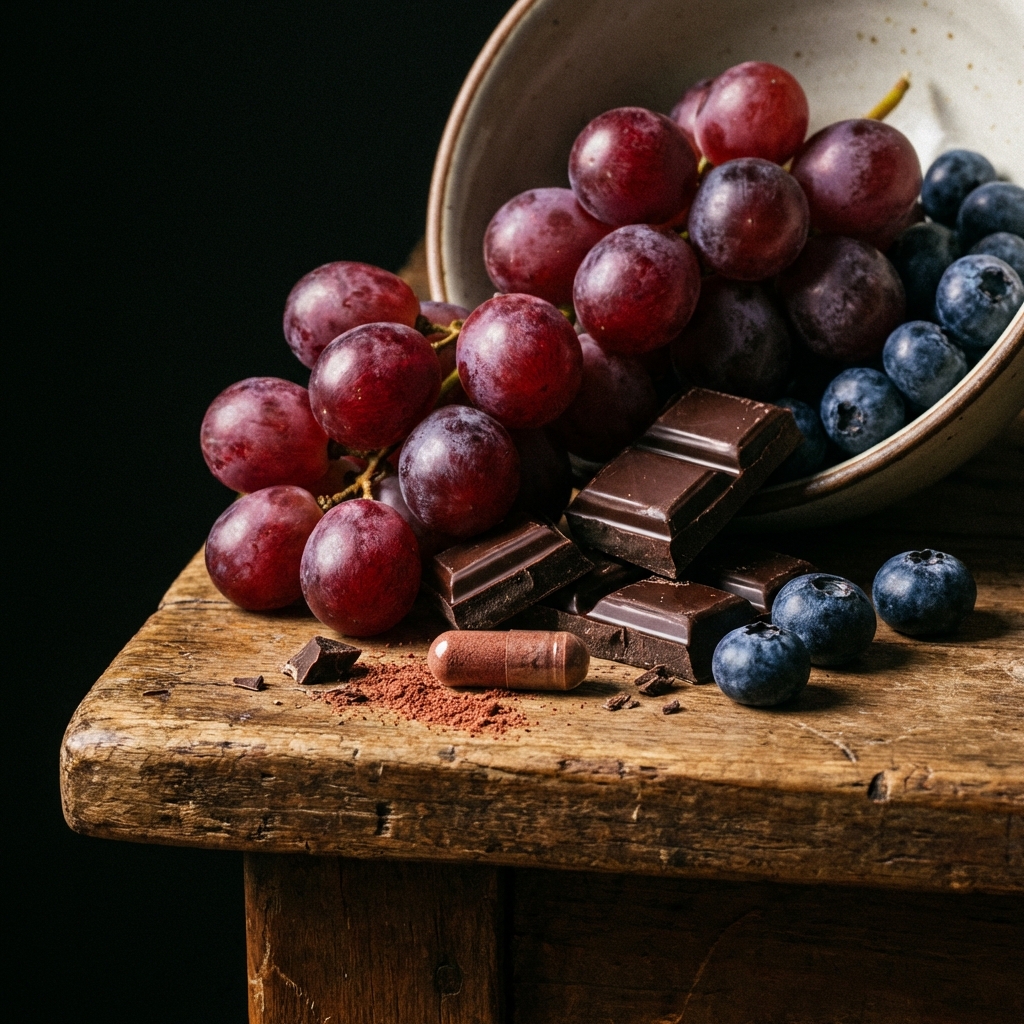
- Grape skins (red > white)
- Berries (blueberries, cranberries)
- Dark chocolate
- Peanuts
- Japanese knotweed (Polygonum cuspidatum)—the most concentrated natural source
How It Works: The Longevity Pathways
1. Activates Sirtuins (SIRT1)
- Sirtuins are “longevity genes” that regulate cellular health
- SIRT1 activation improves mitochondrial function, DNA repair, and insulin sensitivity
- David Sinclair’s research at Harvard made this mechanism famous
2. Mimics Caloric Restriction
- Resveratrol activates AMPK (the cellular energy sensor)
- AMPK activation triggers autophagy (cellular cleanup)
- This is the same pathway activated by fasting
3. Antioxidant and Anti-Inflammatory
- Neutralizes free radicals
- Reduces chronic inflammation (a driver of aging)
- Protects LDL cholesterol from oxidation (key in atherosclerosis)
4. Cardiovascular Protection
- Improves endothelial function (blood vessel flexibility)
- Reduces blood pressure
- Prevents platelet aggregation (clotting)
5. Potential Neuroprotection
- May protect against Alzheimer’s and Parkinson’s
- Crosses the blood-brain barrier
- Reduces beta-amyloid plaques (in animal studies)
Part 2: Natural Sources vs. Therapeutic Needs
1. Red Wine (Pinot Noir)
Resveratrol content: ~0.2-0.5mg per glass (varies by grape variety and fermentation)
Why Pinot Noir?
- Thinner skins = more contact during fermentation
- Cooler climates = more resveratrol production (stress response)
To get 500mg of resveratrol:
- You’d need to drink 1,000-2,500 glasses of wine
- That’s 200-500 bottles
- Daily.
Verdict: Enjoy wine for pleasure and moderate cardiovascular benefits, but don’t rely on it for longevity doses.
2. Dark Chocolate / Cocoa
Resveratrol content: Minute traces (< 0.1mg per serving)
What chocolate DOES have:
- Flavonoids (different polyphenols, still beneficial)
- Epicatechin (improves blood flow, muscle function)
Verdict: Excellent for heart health and antioxidants, but irrelevant for resveratrol dosing.
Recommendation: Eat 85%+ dark chocolate for the flavonoids, not resveratrol.
3. Blueberries & Grapes
Resveratrol content:
- Grapes (with skins): ~0.5-1mg per cup
- Blueberries: ~0.1mg per cup
Verdict: These are nutrient-dense superfoods with fiber, vitamins, and other polyphenols. Eat them daily for general health, but they won’t provide therapeutic resveratrol doses.
4. Peanuts & Peanut Butter
Resveratrol content: ~0.15mg per serving
Note: Peanuts also contain aflatoxins (mold toxins) if not properly stored. Not an ideal primary source.
5. Japanese Knotweed (Polygonum cuspidatum)
Resveratrol content: 50-200mg per gram of extract
This is the source used in most supplements.
Why knotweed?
- Extremely high concentration
- Contains trans-resveratrol (the bioactive form)
- Sustainable and cost-effective
Part 3: Food vs. Supplements—The Math
| Source | Resveratrol per Serving | Servings Needed for 500mg |
|---|---|---|
| Red wine (glass) | 0.3mg | 1,667 glasses |
| Blueberries (cup) | 0.1mg | 5,000 cups |
| Grapes (cup) | 0.8mg | 625 cups |
| Dark chocolate (1 oz) | 0.05mg | 10,000 oz (625 lbs) |
| Japanese knotweed (1g extract) | 100mg | 5 grams |
Conclusion: Supplementation is the only practical way to achieve therapeutic doses.
Part 4: Choosing a Resveratrol Supplement
The Critical Factor: Trans-Resveratrol
Resveratrol exists in two forms:
- Trans-resveratrol: Bioactive (what you want)
- Cis-resveratrol: Biologically inert (useless)
Red flag: Many cheap supplements list “resveratrol” without specifying the form. They often contain mostly cis-resveratrol.
Always look for: “Trans-resveratrol” on the label.
Bioavailability: The Fat Solution
The problem: Resveratrol is fat-soluble. Taking it with water on an empty stomach results in ~1-5% absorption. You’re wasting 95% of your money.
The solution: Take resveratrol with fat.
Best options:
- Greek yogurt (David Sinclair’s method)
- Olive oil (drizzle on food)
- Fatty meal (avocado, nuts, fish)
Advanced option: Liposomal resveratrol (see below)
Forms of Resveratrol Supplements
1. Standard Powder/Capsules
- Pros: Cheap ($20-40/month)
- Cons: Poor absorption (1-5% unless taken with fat)
- Best brands: NOW Foods, Bulk Supplements, Thorne
2. Micronized Powder
- Pros: Smaller particles = better absorption
- Cons: Still requires fat for optimal uptake
- Best brands: RevGenetics Micronized Trans-Resveratrol
3. Liposomal Resveratrol
- Pros: Encapsulated in fat bubbles (phospholipids), 10-20x higher bioavailability
- Cons: More expensive ($60-100/month)
- Best brand: Renue By Science Lipo Resveratrol
4. Sublingual Powder
- Pros: Absorbs directly into bloodstream (bypasses liver metabolism)
- Cons: Requires precise dosing
- Best brands: DoNotAge, ProHealth Longevity
Part 5: Optimal Dosing Protocol
Beginner (General Health):
- Dose: 250mg trans-resveratrol daily
- Timing: With breakfast (fatty meal)
- Cost: ~$20-30/month
- Goal: Cardiovascular support, mild anti-aging
Intermediate (Longevity Focus):
- Dose: 500mg trans-resveratrol daily
- Timing: With breakfast + fat (yogurt, olive oil)
- Stack with: NMN 500mg (synergistic for NAD+ and Sirtuin activation)
- Cost: ~$50-80/month
- Goal: Activate longevity pathways, reduce inflammation
Advanced (David Sinclair Protocol):
- Dose: 1000mg trans-resveratrol daily
- Timing: Morning with yogurt
- Stack with:
- NMN: 1000mg
- TMG: 1000mg (prevents methyl depletion)
- Metformin: 1000mg (requires prescription)
- Cost: ~$150-200/month
- Goal: Maximum Sirtuin activation, metabolic optimization
Part 6: Synergistic Compounds (The Longevity Stack)
Resveratrol works best when combined with:
1. NMN (Nicotinamide Mononucleotide)
- Why: NMN boosts NAD+ (fuel for Sirtuins). Resveratrol activates Sirtuins.
- Effect: Synergistic longevity pathway activation
- Dose: 500-1000mg NMN + 500-1000mg resveratrol
2. Quercetin
- Why: Another polyphenol that acts as a senolytic (kills “zombie cells”)
- Effect: Enhances anti-inflammatory effects
- Dose: 500mg quercetin + 500mg resveratrol
3. Pterostilbene
- Why: Chemically similar to resveratrol but better bioavailability
- Effect: Longer half-life, better cognitive benefits
- Dose: 50-100mg pterostilbene + 500mg resveratrol
4. Fisetin
- Why: Senolytic (clears senescent cells)
- Effect: Complements resveratrol’s anti-aging effects
- Dose: 100mg fisetin + 500mg resveratrol
Part 7: Safety, Side Effects, and Interactions
Safety Profile:
- Generally safe at doses up to 1500mg/day
- Used in human studies for over 20 years with minimal adverse effects
Potential Side Effects (rare):
- Mild digestive upset (nausea, diarrhea)
- Headache (at very high doses)
- Insomnia (if taken late at night in sensitive individuals)
Drug Interactions:
- Blood thinners (Warfarin, aspirin): Resveratrol has mild anticoagulant effects. Consult doctor.
- Cytochrome P450 substrates: May affect drug metabolism (talk to pharmacist)
Who Should Avoid:
- Pregnant or breastfeeding women (insufficient safety data)
- People on chemotherapy (may interfere with treatment—consult oncologist)
Part 8: Measuring Results
Short-term (4-8 weeks):
- Improved energy (subjective)
- Better skin appearance (anecdotal)
Medium-term (6 months):
- Bloodwork improvements:
- Lower hs-CRP (inflammation marker)
- Better lipid profile (lower oxidized LDL)
- Improved fasting glucose
Long-term (1+ years):
- Epigenetic age testing (TruDiagnostic, Elysium Index)
- Target: Biological age 2-5 years younger than chronological age (with full protocol)
Part 9: Top Resveratrol Supplement Recommendations (2026)
Best Overall: Renue By Science Lipo Resveratrol
- Form: Liposomal (maximum absorption)
- Dose: 500mg trans-resveratrol per serving
- Price: ~$60/month
- Why: Superior bioavailability, no need for fat
Best Budget: NOW Foods Natural Resveratrol
- Form: Standard extract (Japanese knotweed)
- Dose: 200mg trans-resveratrol per capsule
- Price: ~$20/month
- Why: Affordable, reputable brand. Must take with fat.
Best High-Dose: ProHealth Longevity Trans-Resveratrol
- Form: Micronized powder (sublingual)
- Dose: 500mg per scoop
- Price: ~$40/month
- Why: High dose, sublingual absorption
Best Stack: DoNotAge Resveratrol + NMN Bundle
- Form: Capsule combo pack
- Dose: 500mg resveratrol + 500mg NMN
- Price: ~$100/month
- Why: Synergistic combo, convenient
Conclusion: The Resveratrol Reality Check
What resveratrol is:
- A well-studied polyphenol with proven cardiovascular and longevity benefits
- A Sirtuin activator (synergistic with NMN)
- A practical, affordable anti-aging supplement
What resveratrol is NOT:
- A magic bullet (must be combined with sleep, exercise, diet)
- Effective at low doses from food (you need supplements)
- A replacement for prescription medications
Your Action Plan
✅ Week 1: Start with 250mg trans-resveratrol (with breakfast + fat)
✅ Week 4: If well-tolerated, increase to 500mg daily
✅ Month 3: Add NMN 500mg for synergistic effects
✅ Month 6: Get bloodwork (hs-CRP, lipids, glucose) to track progress
✅ Month 12: Consider epigenetic age testing
Final advice: Buy high-quality trans-resveratrol, take it with fat, and combine it with the fundamentals (sleep, fasting, exercise). Enjoy your wine and dark chocolate, but don’t rely on them for longevity.
Your cells will thank you.
Recommended Products
Hand-picked essentials for longevity, recovery, and peak performance.

NIVEA MEN Hyaluron
Anti-Aging Face Cream

Cellular 1-MNA
Anti-Aging Supplement
Bio Green Power
Superfood Blend

Massage Gun
Portable Heat Therapy
As an Amazon Associate we earn from qualifying purchases. Prices may vary.
Written by MensHealthInstitute Team
Evidence-based Longevity Research