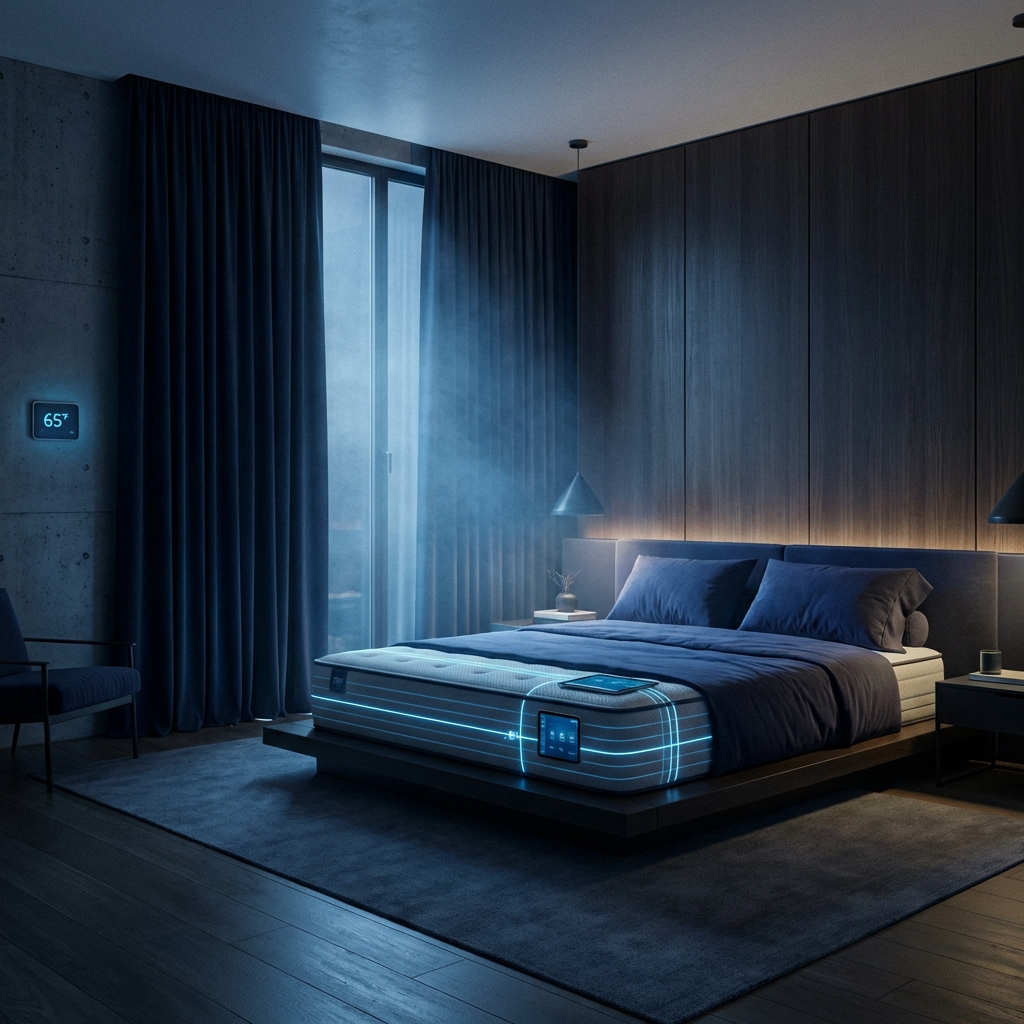
Sleep Optimization for Men: Protocols to Reverse Aging
Transparency Disclosure: This article contains affiliate links. If you purchase through these links, we may earn a small commission to support our research. We only recommend products we personally trust.
The Pillar of Performance
Sleep is not a luxury—it’s the foundation upon which every other health optimization rests. You can eat the perfect diet, train like an Olympian, and take every supplement on the market, but if you sleep 6 hours a night, you will age rapidly and die young.
Why Sleep Is Non-Negotiable:
During sleep, your body performs critical maintenance:
- Glymphatic clearance: The brain’s waste disposal system removes beta-amyloid (linked to Alzheimer’s) and metabolic toxins. This only happens during deep sleep.
- Hormonal reset: Growth hormone peaks during deep sleep stages. Testosterone is restored overnight.
- Memory consolidation: The hippocampus transfers short-term memories to long-term storage.
- Immune function: Cytokines (immune proteins) are produced during sleep. One night of 4-hour sleep reduces natural killer cell activity by 70%.
- Cellular repair: DNA damage is repaired. Mitochondria regenerate.
The data is clear: Men who consistently sleep less than 6 hours have:
- 200% higher risk of heart attack
- Testosterone levels equivalent to someone 10 years older
- 33% increased risk of dementia
If you optimize nothing else, optimize sleep first.
Part 1: Understanding Sleep Architecture
Before you can optimize sleep, you need to understand what good sleep looks like.
The 4 Stages of Sleep:
Stage 1 (N1): Light sleep (5%)
- Transition from wakefulness
- Lasts 1-5 minutes
Stage 2 (N2): Light sleep (45%)
- Heart rate slows, body temperature drops
- Sleep spindles (bursts of brain activity) occur here
Stage 3 (N3): Deep sleep / Slow Wave Sleep (25%)
- Most critical for physical recovery
- Growth hormone release
- Immune system regeneration
- Glymphatic clearance
- Goal: Maximize THIS stage
REM Sleep (25%):
- Rapid Eye Movement
- Dreams occur
- Memory consolidation
- Emotional processing
- Increases in later sleep cycles (why 8 hours \u003e 6 hours)
A Full Night’s Sleep:
- 4-6 complete cycles
- Each cycle = ~90 minutes
- Early cycles: More deep sleep
- Late cycles: More REM sleep
This is why cutting sleep short is catastrophic—you lose REM.
Part 2: The Core Sleep Optimization Protocol
1. Temperature: The Cold Trigger
The Science: Your core body temperature must drop by 2-3°F to initiate sleep. This is controlled by your circadian rhythm. The drop begins ~2 hours before your natural bedtime.
Why most people struggle: Overheated bedrooms prevent this temperature drop.
The Protocol:
Ambient room temperature:
- Optimal: 65-68°F (18-20°C)
- Colder is better for deep sleep
- Use a fan for airflow
Sleep surface temperature: Your mattress traps heat. Active cooling is a game-changer.
Budget ($0):
- Sleep with one leg outside the covers (sounds silly, works)
- Take a hot shower 90 min before bed (causes rebound cooling)
Mid-tier ($300-700):
- BedJet ($299): Forced air cooling under sheets
- ChiliPad ($499): Water-cooled mattress pad
Premium ($2,000+):
- Eight Sleep Pod 4 ($2,695): Active heating/cooling with autopilot AI
- Dual-zone (you + partner)
- Automatically adjusts based on sleep stage detection
- Worth it if sleep is a priority
2. Light: The Master Clock
The Science: Light entering your eyes signals the suprachiasmatic nucleus (SCN) in the hypothalamus. The SCN controls circadian rhythm via melatonin suppression.
- Blue light (450-480nm): Strongest suppressor of melatonin
- Red/amber light (600-700nm): Minimal suppression
The problem: Modern life is a circadian disaster. Bright overhead LEDs + phone screens = perpetual daytime signal.
The Protocol:
Morning (Within 30 min of waking):
- Get 10-30 minutes of direct sunlight (no sunglasses)
- This sets your circadian anchor
- Increases afternoon cortisol (wakefulness)
- Primes melatonin production 12-14 hours later
Daytime:
- Bright light exposure (10,000 lux if possible)
- Work near windows
Evening (After sunset):
- Dim all lights after 8 PM
- Use floor lamps instead of overhead lights
- Install amber/red LED bulbs (Philips Hue, LIFX)
- Flux or Night Shift on all screens (minimum)
1 Hour Before Bed:
- No screens (ideally)
- If you must: Blue light blocking glasses (TrueDark or Ra Optics)
- Kindle Paperwhite (e-ink) is fine
Bedroom:
- Pitch black
- Blackout curtains (100% light blocking)
- Cover all LEDs (electronics, clocks)
- Backup: High-quality sleep mask (Manta or Alaska Bear)
3. Supplementation: The Sleep Stack
Why not melatonin? Melatonin is a hormone. Chronic use may downregulate your natural production. It’s useful for jet lag but not nightly use.
Instead, use supplements that promote natural sleep mechanisms.
The Core Stack (Huberman Protocol):
Magnesium Threonate (or Glycinate)
- Dose: 300-400mg
- Mechanism: Crosses blood-brain barrier, calms nervous system, improves GABA signaling
- Timing: 1-2 hours before bed
- Best form: Threonate for brain, Glycinate for relaxation
Apigenin
- Dose: 50mg
- Mechanism: Chamomile extract, binds to GABA-A receptors (mild sedation)
- Timing: 30-60 min before bed
L-Theanine
- Dose: 200-400mg
- Mechanism: Promotes alpha brain waves (relaxed alertness → sleep)
- Timing: 30-60 min before bed
- Note: May cause vivid dreams (reduce dose if disruptive)
Advanced Add-Ons:
Glycine
- Dose: 3g
- Mechanism: Lowers core body temperature, improves sleep quality
- Evidence: Japanese studies show increased deep sleep
Inositol
- Dose: 900mg
- Mechanism: Reduces nighttime rumination (racing thoughts)
- Best for: Anxiety-related insomnia
GABA
- Dose: 500-1000mg
- Controversy: Doesn’t cross blood-brain barrier well
- Verdict: Works for some (possibly via gut-brain axis)
Ashwagandha (KSM-66)
- Dose: 300-600mg
- Mechanism: Adaptogen, lowers cortisol
- Best for: Stress-induced insomnia
- Timing: With dinner (not before bed, can cause grogginess)
Part 3: Advanced Sleep Optimization
4. Alcohol: The Sleep Destroyer
Hard truth: Alcohol is one of the worst things you can do for sleep quality.
What alcohol does:
- Fragments sleep (frequent awakenings)
- Blocks REM sleep (the restorative stage)
- Increases sleep apnea events
- Dehydrates (causes early waking)
The data: Even 1-2 drinks reduces REM by 20-30%.
Protocol:
- If you drink, finish 3-4 hours before bed
- Limit to 1-2 drinks max
- Hydrate heavily (1:1 water to alcohol ratio)
Ideal: No alcohol within 24 hours of important events (presentations, workouts, etc.)
5. Caffeine: The 10-Hour Half-Life
The mistake: Drinking coffee at 2 PM and wondering why you can’t sleep at 11 PM.
The science:
- Caffeine blocks adenosine receptors (the “sleepiness” molecule)
- Half-life: 5-7 hours (10+ hours in slow metabolizers)
- Even if you “fall asleep,” caffeine reduces deep sleep quality
Protocol:
- Cut-off time: No caffeine after 12 PM (earlier if sensitive)
- Genetic test: 23andMe can tell you if you’re a slow metabolizer (CYP1A2 gene)
- Afternoon energy: L-Theanine, cold exposure, or Zone 2 walk instead
6. Sleep Apnea: The Silent Killer
Stats: 25% of men over 40 have obstructive sleep apnea (OSA). Most are undiagnosed.
What it does:
- Repeated breathing pauses during sleep
- Oxygen desaturation → cardiovascular stress
- Massively reduces deep sleep and REM
Symptoms:
- Loud snoring
- Daytime fatigue (despite “8 hours”)
- Morning headaches
- High blood pressure
- Low testosterone
Screening: Use the Oura Ring, Whoop, or CPAP at-home test (Lofta, SleepDynamic).
Treatment:
- Mouth tape: Forces nasal breathing (3M Micropore tape)
- CPAP machine: Gold standard if diagnosed
- Weight loss: 10% weight loss improves OSA significantly
- Sleep position: Side sleeping (not back)
7. The Perfect Sleep Environment
The bedroom should be a sleep sanctuary:
✅ Cool: 65-68°F ✅ Dark: Blackout curtains, no LEDs ✅ Quiet: White noise machine if needed (Dohm or LectroFan) ✅ Decluttered: Minimal visual stimuli ✅ Mattress quality: Replace every 7-10 years
What doesn’t belong in the bedroom: ❌ TV ❌ Work desk ❌ Bright alarm clock (use phone face-down or Hatch Restore)
Part 4: The Sleep Routine (Step-by-Step)
2 Hours Before Bed:
- Finish last meal (avoid heavy food)
- Dim all lights
- Hot bath or sauna (optional, causes rebound cooling)
1 Hour Before Bed:
- Take sleep stack (Mag Threonate, Apigenin, Theanine)
- Blue light blocking glasses if using screens
- Read a book (physical or Kindle)
- 10-minute meditation or breathwork
30 Minutes Before Bed:
- Brush teeth, skincare
- Turn on Eight Sleep cooling (or AC to 65°F)
- Journal (brain dump worries → reduces rumination)
Lights Out:
- Same time every night (±30 min)
- Mouth tape (if experimenting with nasal breathing)
- Sleep mask (if room isn’t pitch black)
If You Can’t Fall Asleep (20-Min Rule):
- Don’t lie awake in bed
- Get up, read in dim light until drowsy
- Avoid checking the time (causes anxiety)
Part 5: Tracking and Optimization
What gets measured gets managed.
Best Sleep Trackers (2026):
Oura Ring Gen 5 ($499)
- Most accurate for sleep stages
- HRV, resting heart rate, body temperature
- Readiness Score tells you how recovered you are
Whoop 4.0 ($30/month)
- Excellent for athletes
- Recovery score + strain tracking
Eight Sleep Pod (included with mattress)
- Real-time biofeedback
- Autopilot adjusts temperature based on sleep stage
Key Metrics to Track:
- Total Sleep Time: 7-9 hours
- Sleep Efficiency: \u003e 85% (time asleep / time in bed)
- Deep Sleep: 15-25% (90-120 min)
- REM Sleep: 20-25% (90-120 min)
- HRV: Higher = better recovery
- Resting Heart Rate: Should drop during sleep
Trend over time, not daily fluctuations.
Part 6: Troubleshooting Common Issues
Issue: “I can’t fall asleep”
Solution:
- Earlier caffeine cut-off
- More morning sunlight
- 10-min NSDR (Non-Sleep Deep Rest) practice before bed
- Consider magnesium deficiency
Issue: “I wake up at 3 AM”
Solution:
- Blood sugar crash → eat protein before bed
- Sleep apnea → get tested
- Alcohol → eliminate or reduce
- Cortisol spike → ashwagandha with dinner
Issue: “I sleep 8 hours but feel exhausted”
Solution:
- Test for sleep apnea (most common cause)
- Check thyroid (TSH, Free T3)
- Mouth breathe → tape + nasal breathing practice
Conclusion: Sleep Is the Ultimate Biohack
Every other longevity intervention—fasting, exercise, supplements, peptides—is amplified by quality sleep and negated by poor sleep.
The hierarchy of sleep optimization:
Tier 1 (Free):
- Consistent sleep/wake times
- Morning sunlight
- Cool, dark bedroom
- No caffeine after noon
Tier 2 ($50-200):
- Magnesium + Apigenin + Theanine stack
- Blackout curtains
- Blue light blocking glasses
- Mouth tape
Tier 3 ($500-3000):
- Oura Ring or Whoop
- Eight Sleep or ChiliPad
- CPAP (if diagnosed with sleep apnea)
Start with Tier 1. Perfect the basics before buying gadgets.
Final Protocol Summary
✅ 7-9 hours in bed (same time every night) ✅ Morning sunlight (within 30 min of waking) ✅ No caffeine after 12 PM ✅ No alcohol within 3 hours of bed ✅ Cool bedroom (65-68°F) ✅ Pitch black (blackout + sleep mask) ✅ Sleep stack (Mag, Apigenin, Theanine) ✅ Track with Oura or Whoop (optimize over time)
Sleep is the most powerful performance-enhancing, anti-aging, longevity-promoting intervention available. It’s free. It’s natural. And most people are terrible at it.
Don’t be most people. Master sleep, master life.
Recommended Products
Hand-picked essentials for longevity, recovery, and peak performance.

NIVEA MEN Hyaluron
Anti-Aging Face Cream

Cellular 1-MNA
Anti-Aging Supplement
Bio Green Power
Superfood Blend

Massage Gun
Portable Heat Therapy
As an Amazon Associate we earn from qualifying purchases. Prices may vary.
Written by MensHealthInstitute Team
Evidence-based Longevity Research