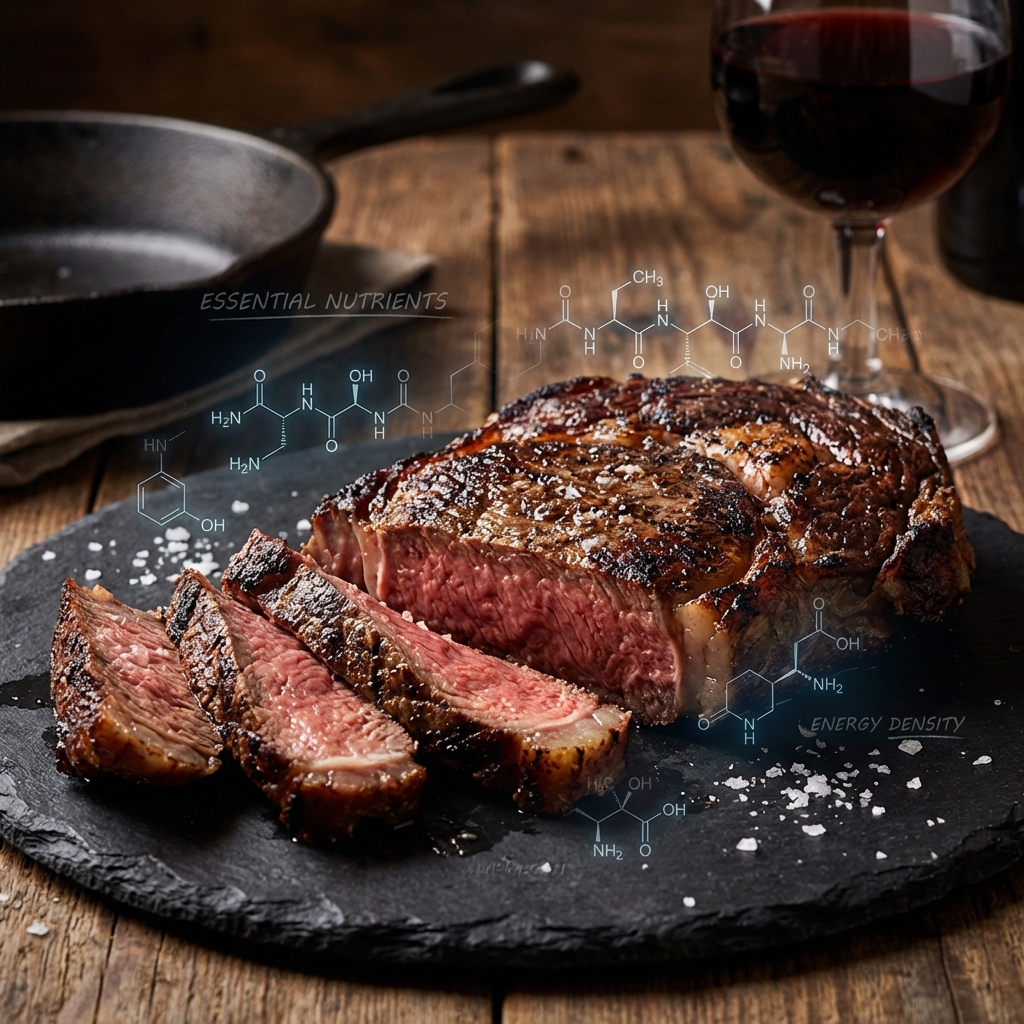
Protein for Men 30+: How Much, When, and How to Keep It Simple
Transparency Disclosure: This article contains affiliate links. If you purchase through these links, we may earn a small commission to support our research. We only recommend products we personally trust.
Protein advice usually swings between two extremes: “eat whatever” and “eat 250 g per day or you are wasting your training.” The truth is simpler. Most men over 30 benefit from slightly higher protein and, even more importantly, a better distribution across the day.
This article gives you practical ranges and a low-friction way to implement them.
1) Why protein matters beyond muscles
Higher protein intake often supports:
- satiety and appetite control,
- recovery from training,
- muscle retention during fat loss,
- bone health indirectly (via muscle and strength training).
For body composition and longevity, protein is a first-line lever.
2) How much protein per day: practical ranges
A useful framework ties protein to body weight and activity:
- if you lift and want to build or maintain muscle, many men do well in the ~1.6 to 2.2 g/kg/day range,
- if you are less active, the lower end can be enough.
You do not need perfect precision. Weekly consistency beats daily perfection.
3) When to eat it: distribution that works
Instead of eating most protein late at night:
- split protein across 3 to 4 meals,
- prioritize breakfast and lunch,
- after training, eat a real meal when possible.
If you eat only two meals per day, make them larger and ensure each meal contains a strong protein source.
4) What it looks like in real foods (without weighing everything)
Helpful approximations:
- a palm-sized portion of meat or fish is often ~25 to 40 g of protein,
- 200 g of skyr/Greek yogurt is often ~20 to 30 g,
- 3 to 4 eggs is often ~18 to 28 g,
- one scoop of protein powder is often ~20 to 30 g.
Do one “rough calculation” day, then run simple templates.
5) Quality and sources: not just chicken
The best protein source is one you can eat consistently and digest well. Good rotations:
- animal sources: eggs, high-protein dairy, fish, lean meats,
- plant sources: tofu/tempeh, legumes, edamame, lentils,
- convenience options: protein powder, jerky, high-protein yogurt (watch added sugar).
If you rely on plant protein, portions are often larger because protein density can be lower and fiber is higher (a benefit, but it can reduce appetite).
6) A simple daily template (no calorie math)
Not a diet, just a structure:
- Breakfast: eggs + skyr/Greek yogurt + fruit
- Lunch: large serving of meat/fish/tofu + potatoes/rice + vegetables
- Dinner: salad with tuna/chicken/cheese, or soup plus an extra protein source
- Optional: a shake after training if you struggle to hit protein with food
Most people do not fail because of macro math. They fail because there is no plan. Templates remove decision friction.
7) Protein and kidneys: the common concern
In generally healthy, active adults, higher protein is often well tolerated. But this is not a zero-risk topic for everyone. If you have:
- kidney disease,
- abnormal creatinine/eGFR,
- uncontrolled hypertension,
work with a clinician or qualified dietitian. Optimization should support health, not replace diagnostics.
8) Common mistakes
- very low protein at breakfast and then “catching up” at night,
- protein without fiber and micronutrients (vegetables matter),
- too little total food while training hard (recovery collapses),
- confusing “high protein” with “zero carbs”.
9) When protein powder makes sense
A shake is a logistics tool. It helps when:
- mornings are rushed,
- you cannot eat a full meal after training,
- you are cutting and want a high-protein option without extra fat.
It is not required if whole-food protein is consistent. For most men, one serving per day is plenty.
10) Cutting vs bulking: how priorities shift
During fat loss, protein becomes even more important for muscle retention and satiety. During a mass-gain phase, protein still matters, but calories and training fuel often become the bigger bottlenecks.
A good compromise: keep a stable protein “skeleton” and adjust total calories and carbs based on the goal.
11) Travel and busy weeks: the protein fallback list
Most men miss protein not because they do not know the target, but because logistics break. A simple fallback list helps:
- skyr/Greek yogurt cups, cottage cheese, jerky,
- canned fish, rotisserie chicken, pre-cooked eggs,
- a scoop of protein powder for the worst-case scenario,
- a rule: every meal starts with a protein choice, then you build the rest.
If you can execute the fallback list, you will stay consistent even when life is messy.
12) The simplest per-meal rule
If tracking feels annoying, use this: aim for a clear protein source at every meal, and make it the first decision. Most men who do that automatically land in a solid daily range without counting anything.
Bottom line
Set a protein range, distribute it across the day, and lock in breakfast. That single change often improves satiety, makes fat loss easier, and supports muscle retention. Choose a repeatable system, not a perfect one.
This is not medical advice. If you have kidney disease or other medical issues, discuss diet changes with a clinician.
Recommended Products
Hand-picked essentials for longevity, recovery, and peak performance.

NIVEA MEN Hyaluron
Anti-Aging Face Cream

Cellular 1-MNA
Anti-Aging Supplement

Bio Green Power
Superfood Blend

Massage Gun
Portable Heat Therapy
As an Amazon Associate we earn from qualifying purchases. Prices may vary.
Written by MensHealthInstitute Team
Evidence-based Longevity Research