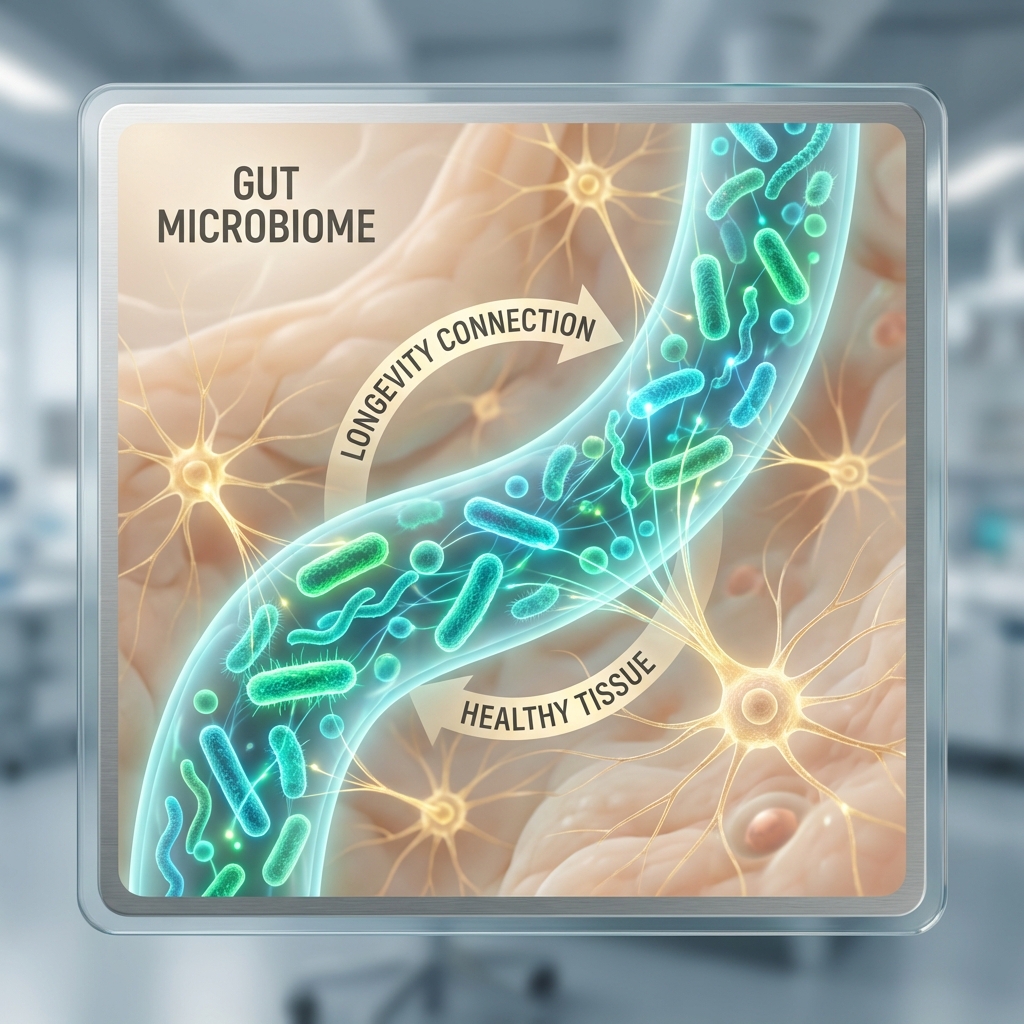
Gut Health & Longevity: How Your Microbiome Controls Aging
Transparency Disclosure: This article contains affiliate links. If you purchase through these links, we may earn a small commission to support our research. We only recommend products we personally trust.
Your Second Brain: The Gut Microbiome
You are not alone in your body. You’re carrying around 38 trillion bacterial cells—more bacterial cells than human cells. This ecosystem, called the microbiome, weighs ~3-4 pounds (as much as your brain) and contains more genetic material than your entire human genome.
And it controls far more than you think:
- 70% of your immune system lives in your gut
- 90% of serotonin (the “happy neurotransmitter”) is produced in the gut
- Your gut microbiome regulates inflammation, weight, mood, and aging
The shocking reality:
- Poor gut health = chronic inflammation = accelerated aging
- A disrupted microbiome is linked to: obesity, diabetes, Alzheimer’s, Parkinson’s, autoimmune diseases, depression, and even cancer
The good news: Your microbiome is modifiable. You can rebuild it in as little as 3-6 months with the right interventions.
This guide covers:
- The science of the microbiome and aging
- How to test your gut health
- Foods that heal (and destroy) your microbiome
- Probiotic and prebiotic protocols
- Advanced strategies (fecal microbiota transplants, soil-based organisms)
Part 1: The Microbiome & Aging
What Is the Microbiome?
The microbiome is the collection of trillions of microorganisms (bacteria, viruses, fungi, archaea) living primarily in your large intestine.
Key bacterial phyla:
- Firmicutes: Associated with energy extraction (high in obese individuals)
- Bacteroidetes: Associated with leanness
- Actinobacteria: Includes Bifidobacteria (beneficial)
- Proteobacteria: Often pathogenic (E. coli, Salmonella)
Diversity = health:
- A diverse microbiome is resilient and anti-inflammatory
- A “dysbiotic” (unbalanced) microbiome is pro-inflammatory and disease-promoting
How the Microbiome Affects Aging
1. Inflammaging (Inflammation + Aging)
- Chronic low-grade inflammation is the #1 driver of aging
- A disrupted microbiome produces endotoxins (LPS—lipopolysaccharides) that leak into the bloodstream
- This triggers systemic inflammation (measured as elevated hs-CRP)
2. The Gut-Brain Axis
- The gut produces neurotransmitters (serotonin, GABA, dopamine)
- The vagus nerve connects the gut to the brain (bidirectional communication)
- Gut dysbiosis = depression, anxiety, brain fog, cognitive decline
3. Immune System Regulation
- 70-80% of immune cells reside in the gut (GALT—Gut-Associated Lymphoid Tissue)
- A healthy microbiome “trains” the immune system to distinguish friend from foe
- Dysbiosis = autoimmune diseases (the immune system attacks the body)
4. Metabolic Health
- Gut bacteria produce short-chain fatty acids (SCFAs) like butyrate
- Butyrate fuels colon cells, reduces inflammation, improves insulin sensitivity
- Dysbiosis = obesity, insulin resistance, Type 2 diabetes
5. Nutrient Production
- Gut bacteria synthesize vitamins: B12, B7 (biotin), K2
- A damaged microbiome = nutrient deficiencies (even with good diet)
Centenarians Have Unique Microbiomes
Research on 100+ year-olds (centenarian studies):
- Higher diversity than younger adults
- More Bifidobacteria and Akkermansia muciniphila
- Lower levels of pathogenic bacteria
- Higher production of butyrate
Key takeaway: A youthful microbiome = a longer healthspan.
Part 2: Signs of Poor Gut Health
Digestive Symptoms
- Bloating, gas, constipation, diarrhea
- Heartburn, acid reflux
- Food intolerances (sudden reactions to foods you previously tolerated)
- Undigested food in stool
Systemic Symptoms
- Skin issues: Acne, eczema, rosacea (gut-skin axis)
- Mood disorders: Depression, anxiety, brain fog
- Autoimmune conditions: Hashimoto’s, rheumatoid arthritis, IBD
- Frequent infections: Weak immune system
- Weight gain: Despite caloric restriction (gut bacteria regulate metabolism)
- Chronic fatigue: Poor nutrient absorption
Part 3: Root Causes of Gut Dysbiosis
1. Antibiotics
The problem:
- Antibiotics kill both harmful AND beneficial bacteria
- A single course can disrupt the microbiome for 6-12 months
- Repeated antibiotic use = long-term dysbiosis
The solution:
- Avoid unnecessary antibiotics (e.g., for viral infections—they don’t work)
- If you MUST take antibiotics:
- Take probiotics (Saccharomyces boulardii) during treatment
- Rebuild with high-dose probiotics + prebiotics after
2. Poor Diet (The Standard American Diet)
The culprits:
- Processed foods: Additives, emulsifiers (polysorbate 80, carrageenan) damage gut lining
- Sugar: Feeds pathogenic bacteria and yeast (Candida)
- Seed oils: Inflammatory (damage intestinal barrier)
- Low fiber: Starves beneficial bacteria (need prebiotics to survive)
The solution:
- Eat real, whole foods
- High fiber (30-50g per day)
- Fermented foods (probiotics)
- Eliminate processed foods
3. Chronic Stress
The mechanism:
- Stress activates the HPA axis (hypothalamus-pituitary-adrenal)
- Cortisol disrupts gut motility and increases intestinal permeability (“leaky gut”)
- Alters gut bacteria composition (reduces beneficial species)
The solution:
- Stress management (meditation, breathwork, time in nature)
- Adaptogens (Ashwagandha, Rhodiola)
- Prioritize rest and recovery
4. Lack of Sleep
The mechanism:
- Sleep deprivation disrupts circadian rhythms
- Your gut bacteria have circadian rhythms too (yes, really)
- Poor sleep = dysbiosis
The solution:
- 7-9 hours of quality sleep per night
5. Environmental Toxins
The culprits:
- Glyphosate (Roundup): Herbicide residue on non-organic food, kills gut bacteria
- Plastics (BPA, phthalates): Endocrine disruptors
- Heavy metals: Mercury, lead (from contaminated water, fish)
The solution:
- Buy organic (especially the “Dirty Dozen” produce)
- Filter water (reverse osmosis)
- Avoid plastic food containers
6. Lack of Microbial Exposure
The hygiene hypothesis:
- Modern life is TOO clean
- Lack of exposure to dirt, animals, nature = underdeveloped immune system
- Oversanitization = higher rates of allergies, autoimmune diseases
The solution:
- Spend time in nature (forest bathing)
- Get a dog (pet ownership linked to more diverse microbiome)
- Don’t over-sanitize (soap and water > antibacterial everything)
Part 4: Testing Your Gut Health
Option 1: Stool Microbiome Test
Companies:
- Viome ($199-399): AI-driven recommendations
- Thorne Gut Health Test ($199): Focuses on diversity + pathogens
- Ombre (formerly Thryve) ($99-199): Personalized probiotic recommendations
- GI-MAP ($370): Clinical-grade (requires practitioner)
What they measure:
- Bacterial diversity (higher = better)
- Beneficial vs. pathogenic bacteria ratios
- Inflammation markers (calprotectin)
- Digestive function (elastase for pancreatic enzymes)
How often to test:
- Baseline test first
- Retest after 3-6 months of interventions
Option 2: Functional Markers (Blood/Stool)
Markers of gut health:
- Zonulin: Elevated = leaky gut (intestinal permeability)
- hs-CRP: Inflammation marker (should be < 1 mg/L)
- LPS (lipopolysaccharides): Endotoxin from gut bacteria (leaks into blood)
- Vitamin B12, folate: Low levels suggest malabsorption
Part 5: The Gut-Healing Protocol
Step 1: Remove (Eliminate Gut Irritants)
Remove these for 30 days:
- Processed foods, seed oils, sugar
- Alcohol (damages gut lining)
- Gluten (if sensitive—test this)
- Dairy (if lactose intolerant or sensitive to casein)
- NSAIDs (ibuprofen, aspirin—damage gut lining)
Why it works:
- Gives the gut time to heal
- Reduces inflammation
- Starves pathogenic bacteria
Step 2: Replace (Add Digestive Support)
If you have digestive symptoms:
Digestive Enzymes
- Dose: 1-2 capsules with meals
- Helps break down food (reduces bloating, improves absorption)
- Best brands: NOW Foods Super Enzymes, Garden of Life
Betaine HCL (if low stomach acid)
- Dose: 1-2 capsules with protein meals
- Symptoms of low stomach acid: bloating, heartburn, undigested food
- Start with 1 capsule, increase if tolerated
Step 3: Reinoculate (Add Beneficial Bacteria)
High-Quality Probiotics
Best strains for longevity:
- Lactobacillus rhamnosus GG: Immune support
- Bifidobacterium longum: Anti-inflammatory, longevity-associated
- Lactobacillus plantarum: Gut lining repair
- Saccharomyces boulardii: Yeast probiotic (survives antibiotics)
- Akkermansia muciniphila: Improves metabolic health (experimental, not in most probiotics yet)
Recommended probiotics:
- Seed Daily Synbiotic ($49/month): Probiotic + prebiotic combo
- Visbiome (previously VSL#3): High-potency (450 billion CFU)
- Garden of Life Dr. Formulated Probiotics ($30): Diverse strains
- Jarrow Formulas Jarro-Dophilus EPS ($20): Budget option
Dosage:
- Start with 10-50 billion CFU daily
- Advanced: 50-100 billion CFU
When to take:
- On an empty stomach (or with a light meal)
- Morning or before bed
Step 4: Repair (Heal the Gut Lining)
L-Glutamine
- Dose: 5-10g daily (powder mixed in water)
- Heals intestinal lining (reduces “leaky gut”)
- Take on empty stomach (morning or before bed)
Collagen / Bone Broth
- Provides amino acids (glycine, proline) for gut repair
- Dose: 10-20g collagen powder OR 1-2 cups bone broth daily
Zinc Carnosine
- Dose: 75mg twice daily
- Repairs gut lining, reduces inflammation
DGL (Deglycyrrhizinated Licorice)
- Dose: 400-800mg before meals
- Soothes gut lining, reduces heartburn
Step 5: Rebalance (Feed the Good Bacteria)
Prebiotics (fiber that feeds beneficial bacteria):
Best prebiotic foods:
- Garlic, onions, leeks (rich in inulin)
- Asparagus, artichokes
- Green bananas, plantains (resistant starch)
- Oats, barley (beta-glucan fiber)
- Apples (pectin)
- Chicory root (highest inulin content)
Prebiotic supplements:
- Inulin powder: 5-10g daily (start low, increase slowly to avoid gas)
- Acacia fiber (gum arabic): 5-10g daily (well-tolerated)
- Resistant starch (potato starch): 1-4 tablespoons daily (mix in water, smoothies)
Target fiber intake:
- 30-50g per day (most people get < 15g)
Part 6: Gut-Healing Foods
Probiotic-Rich Foods (Live Cultures)
1. Sauerkraut (Fermented Cabbage)
- Strains: Lactobacillus plantarum, L. brevis
- Serving: 2-4 tablespoons daily
- Buy unpasteurized (live cultures) or make your own
2. Kimchi (Korean Fermented Vegetables)
- Strains: Lactobacillus kimchii, Leuconostoc
- Serving: 2-4 tablespoons daily
- Spicy, flavorful, nutrient-dense
3. Kefir (Fermented Milk)
- Strains: 30-60 different strains (far more than yogurt)
- Serving: 1 cup daily
- Non-dairy option: Coconut milk kefir
4. Greek Yogurt (Full-Fat, Unsweetened)
- Strains: L. bulgaricus, S. thermophilus (look for “live active cultures” label)
- Serving: 1 cup daily
- Avoid: Flavored, sugary yogurts
5. Kombucha (Fermented Tea)
- Strains: Various (depends on SCOBY culture)
- Serving: 4-8 oz daily
- Watch sugar content (some brands have 10g+ per serving)
6. Miso (Fermented Soybean Paste)
- Serving: 1-2 tablespoons in soup
- Rich in Aspergillus oryzae (beneficial fungus)
Prebiotic-Rich Foods (Fiber for Bacteria)
1. Garlic
- High in inulin (prebiotic fiber)
- Antimicrobial (kills pathogens, spares beneficial bacteria)
- Add raw to salads or lightly cook
2. Onions & Leeks
- Rich in inulin and FOS (fructooligosaccharides)
- Cook or eat raw
3. Asparagus
- High in inulin
- Supports Bifidobacteria growth
4. Green Bananas (Unripe)
- Rich in resistant starch (feeds colon bacteria)
- Becomes regular starch when ripe
5. Oats
- Beta-glucan fiber (prebiotic + cholesterol-lowering)
- Overnight oats or cooked oatmeal
Polyphenol-Rich Foods (Support Beneficial Bacteria)
Polyphenols are plant compounds that beneficial bacteria LOVE.
Top sources:
- Berries (blueberries, blackberries)
- Dark chocolate (85%+ cacao)
- Green tea
- Extra virgin olive oil
- Red wine (in moderation—1 glass)
- Pomegranate
Part 7: Advanced Gut Healing Strategies
1. Fecal Microbiota Transplant (FMT)
What it is:
- Transfer of stool from a healthy donor to a patient
- Introduces a complete, diverse microbiome
FDA-approved for:
- Clostridioides difficile (C. diff) infection (90% cure rate)
Experimental use (not FDA-approved):
- Ulcerative colitis, Crohn’s disease
- Obesity, metabolic syndrome
- Autism (controversial, limited data)
Availability:
- Clinical trials (research institutions)
- DIY FMT (not recommended—safety risks)
Verdict: Promising, but wait for more research (unless you have C. diff)
2. Soil-Based Probiotics (SBOs)
What they are:
- Bacteria naturally found in soil (Bacillus species)
- More resilient than standard probiotics (survive stomach acid)
Benefits:
- Improve gut diversity
- Increase short-chain fatty acid production
- Support immune function
Best brands:
- Microbiome Labs MegaSporeBiotic: Bacillus subtilis, B. coagulans, B. clausii
- Just Thrive Probiotic: Bacillus indicus HU36
Dosage:
- 1-2 capsules daily
3. Spore-Based Probiotics
What they are:
- Dormant bacterial spores (activate in the gut)
- Extremely shelf-stable (no refrigeration needed)
Why they’re unique:
- Bacillus subtilis produces nattokinase (cardiovascular benefits)
- Bacillus coagulans survives harsh conditions (antibiotics, stomach acid)
4. Akkermansia muciniphila (The Longevity Bacteria)
What it is:
- A keystone bacterial species linked to longevity
- Strengthens gut lining (mucin production)
- Improves metabolic health (insulin sensitivity, fat loss)
How to increase it:
- Polyphenols: Cranberries, pomegranate, green tea
- Omega-3s: Fish oil
- Intermittent fasting: Promotes Akkermansia growth
Supplement:
- Pendulum Glucose Control (contains Akkermansia—prescription required in some states)
Part 8: The 30-Day Gut Reset Protocol
Week 1: Remove
- Eliminate: Sugar, processed foods, alcohol, gluten, dairy
- Add: Whole foods, vegetables, clean protein
Week 2: Replace
- Add digestive enzymes (with meals)
- Add Betaine HCL (if needed)
Week 3: Reinoculate
- Start high-quality probiotic (50 billion CFU)
- Eat fermented foods daily (sauerkraut, kimchi, kefir)
Week 4: Repair & Rebalance
- Add L-Glutamine (5-10g daily)
- Add prebiotic fiber (inulin, resistant starch)
- Collagen or bone broth daily
Ongoing:
- Maintain high-fiber diet (30-50g daily)
- Continue probiotics (cycle brands every 3 months)
- Monitor symptoms, retest microbiome at 6 months
Part 9: Gut-Brain-Immune Axis
The Gut-Brain Connection
The vagus nerve:
- Connects gut to brain (bidirectional communication)
- 90% of signals travel FROM gut TO brain (not the reverse)
Gut bacteria produce neurotransmitters:
- Serotonin (90%): Mood regulation
- GABA: Calming neurotransmitter
- Dopamine: Motivation, reward
Dysbiosis = mental health issues:
- Depression, anxiety, ADHD
- Brain fog, memory issues
- Alzheimer’s, Parkinson’s (linked to gut dysbiosis)
The Gut-Immune Connection
70% of immune cells live in the gut (GALT):
- Gut bacteria “train” the immune system
- A diverse microbiome = balanced immune response
- Dysbiosis = autoimmune diseases (body attacks itself)
Conditions linked to gut dysbiosis:
- Rheumatoid arthritis
- Hashimoto’s thyroiditis
- Inflammatory bowel disease (IBD)
- Multiple sclerosis
Conclusion: Your Gut Is Your Foundation
Optimizing your gut microbiome isn’t just about avoiding bloating. It’s about:
- Longevity: Centenarians have diverse, healthy microbiomes
- Immunity: 70% of immune function starts in the gut
- Mental health: Your gut produces 90% of your serotonin
- Metabolic health: Gut bacteria regulate weight, insulin sensitivity
The hierarchy:
- Remove: Eliminate gut irritants (processed foods, sugar, alcohol)
- Replace: Digestive enzymes (if needed)
- Reinoculate: Probiotics + fermented foods
- Repair: L-Glutamine, collagen, bone broth
- Rebalance: Prebiotics (fiber), polyphenols
Start today:
- Eliminate processed foods for 7 days
- Add 1 fermented food daily (sauerkraut, kimchi)
- Start a high-quality probiotic
- Increase fiber to 30g+ daily
Your gut microbiome is the foundation of longevity. Treat it well, and it will reward you with decades of vitality.
Recommended Products
Hand-picked essentials for longevity, recovery, and peak performance.

NIVEA MEN Hyaluron
Anti-Aging Face Cream

Cellular 1-MNA
Anti-Aging Supplement
Bio Green Power
Superfood Blend

Massage Gun
Portable Heat Therapy
As an Amazon Associate we earn from qualifying purchases. Prices may vary.
Written by MensHealthInstitute Team
Evidence-based Longevity Research